The cupboard under the sink is awkward: pipes in the middle, a damp risk and the products you least want children to reach. Done well, it holds the daily cleaning kit and nothing else.
Empty it and check for leaks
Take everything out and look at the cabinet floor and pipes. Damp patches or drips mean a plumbing job comes first. A thin tray or mat on the base catches future drips and makes leaks easy to spot.
Keep only what is used at the sink
This cupboard is prime space. Keep dish soap refills, sponges, a few daily cleaners and bin bags here. Move backups and rarely used products to a cleaning supply station elsewhere.
Six zones that fit around the pipes
- Dish care: dish soap refill, dishwasher tablets, sponges and brushes.
- Daily spray and cloths: one surface cleaner and a stack of cloths.
- Bin bags: a roll near the front, or mounted on the inside of the door.
- Hand care: spare hand soap.
- Weekly kit: a small caddy you can carry to other rooms.
- Leak watch: the clear space directly under the pipes, kept empty.
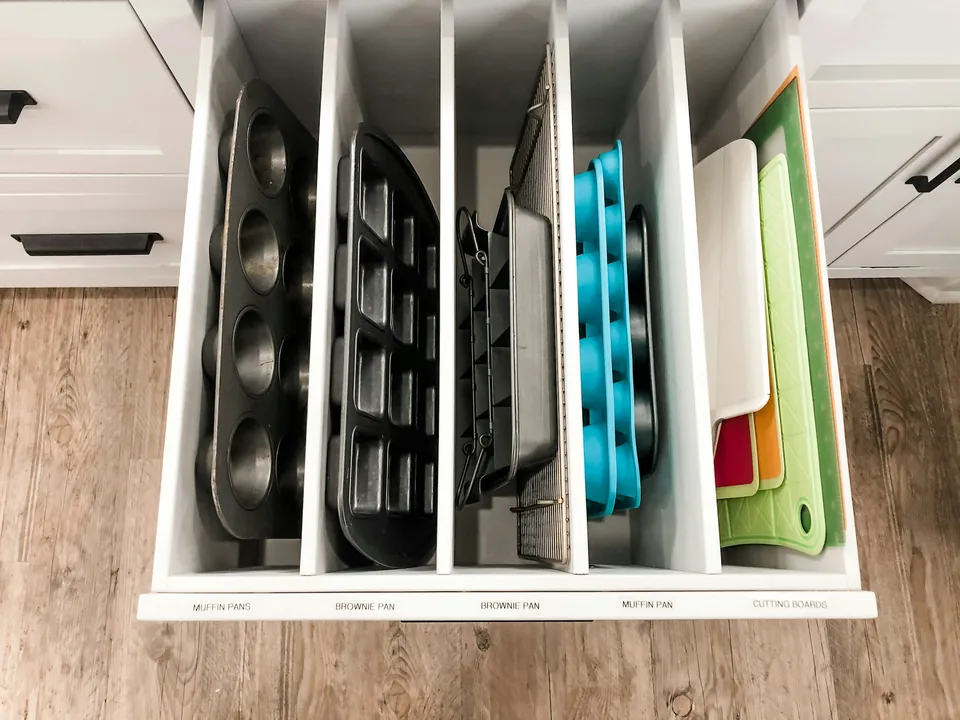
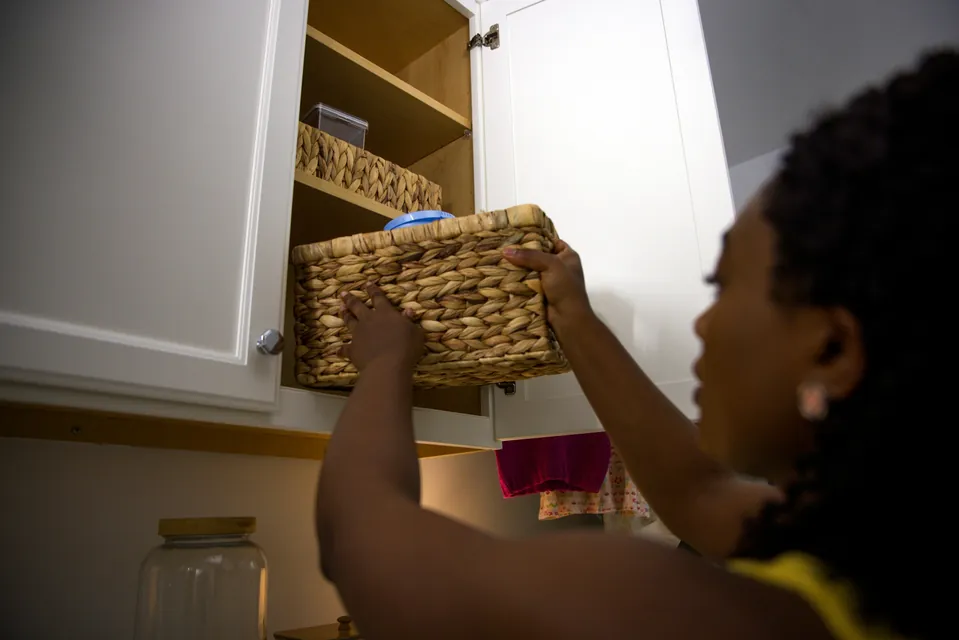
Use open bins that slide out like drawers, and narrow containers on either side of the pipes.
Make it safe for children
Keep cleaning products in their original containers with labels, never mix products, and fit a child-safety latch if young children are in the home. Poison Control and the Consumer Product Safety Commission both recommend storing household chemicals up and away from children, ideally locked. If you can, keep the strongest products on a high shelf elsewhere.
Reset monthly
Once a month, wipe the base, check for leaks and add replacements to the list before the last one runs out. The cleaning schedule builder can add this to your monthly list.
More ideas: grab-and-go cleaning caddies.
Sources & further reading
Adapt these ideas to your household. Organization guidance is general information, not medical, safety or financial advice.