The food container cupboard is where good intentions go to tumble. Lids without bases, bases without lids, and a stack that falls every time someone reaches for the one at the bottom. The fix is mostly subtraction, then a smarter way to stand things up.
Match everything first
Empty the cupboard onto the counter and pair every base with its lid. Put anything without a match, and anything cracked, warped or stained beyond use, in a separate pile. Recycle what your local service accepts.
Keep a sensible number
Think about how many containers you actually use in a busy week for lunches, leftovers and cooking ahead. Keep that number plus a few spares. Many families find they can let go of a third of their collection without noticing.
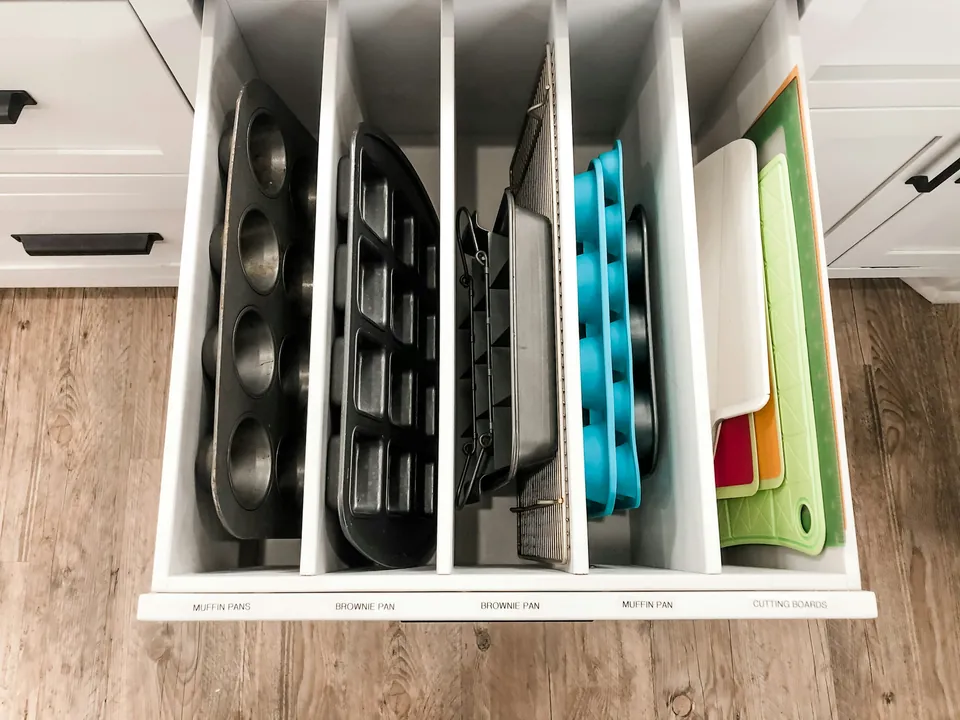
Store lids on their edges
Lids are easier to find standing up, like files. A shallow bin, a drawer divider or a small dish rack works well. Order them by size so the right one is easy to spot.
Nest bases by shape
Nest round with round and rectangular with rectangular. If you have space, keep the most-used sets together, lids on, near where you pack lunches or put away leftovers.
Choose fewer shapes in the future
When you replace containers, consider sticking to one or two ranges in a few sizes whose lids fit several bases. Fewer lid shapes means far fewer mismatches.
Give the cupboard a reset
Add it to your weekly reset: check that lids and bases went back together and set aside any orphans. If you pack lunches every day, a small lunch-packing station keeps the everyday sets out of the main cupboard altogether.
Adapt these ideas to your household. Organization guidance is general information, not medical, safety or financial advice.