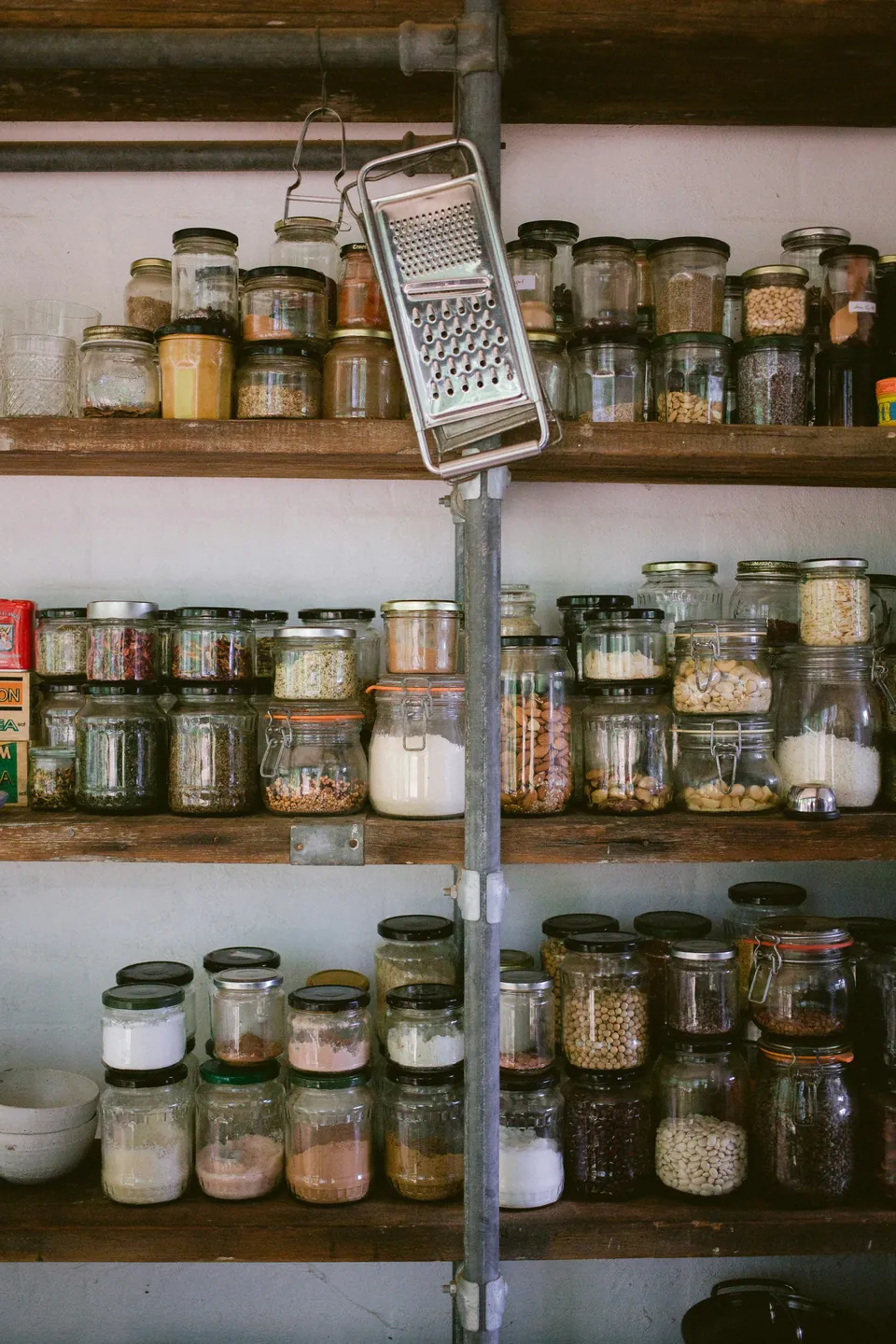
Deep pantry shelves look generous, but anything that goes to the back is soon forgotten. You end up buying another jar of something you already have, or finding a packet that expired last spring. The answer is to make the back of the shelf come forward.
Empty one shelf at a time
Take everything off a single shelf, check dates and group what's left: breakfast, baking, snacks, pasta and grains, tins, sauces. One shelf at a time keeps the job manageable on a weeknight.
Use bins as drawers
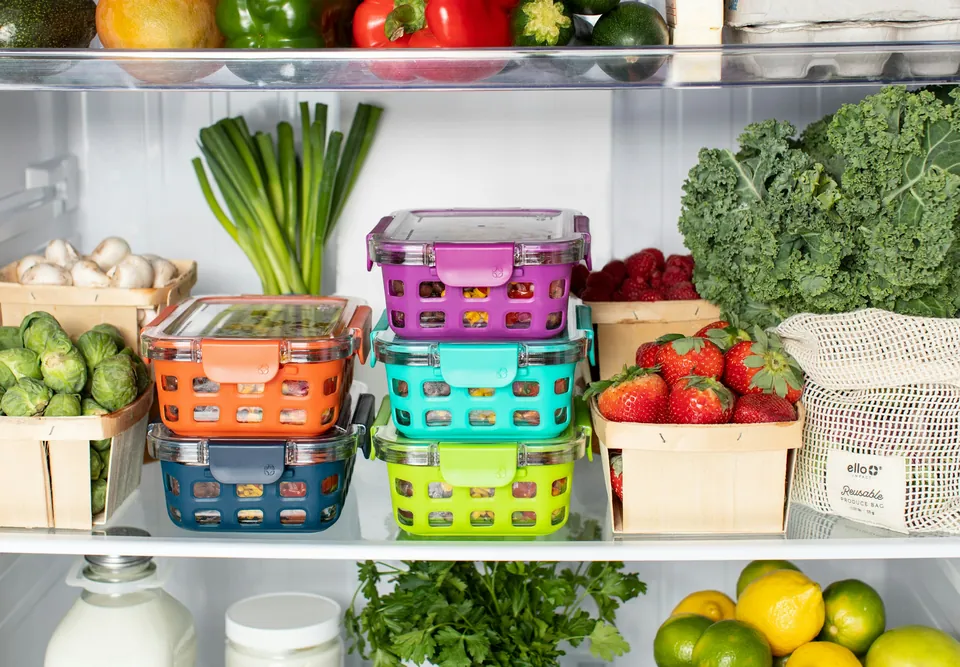
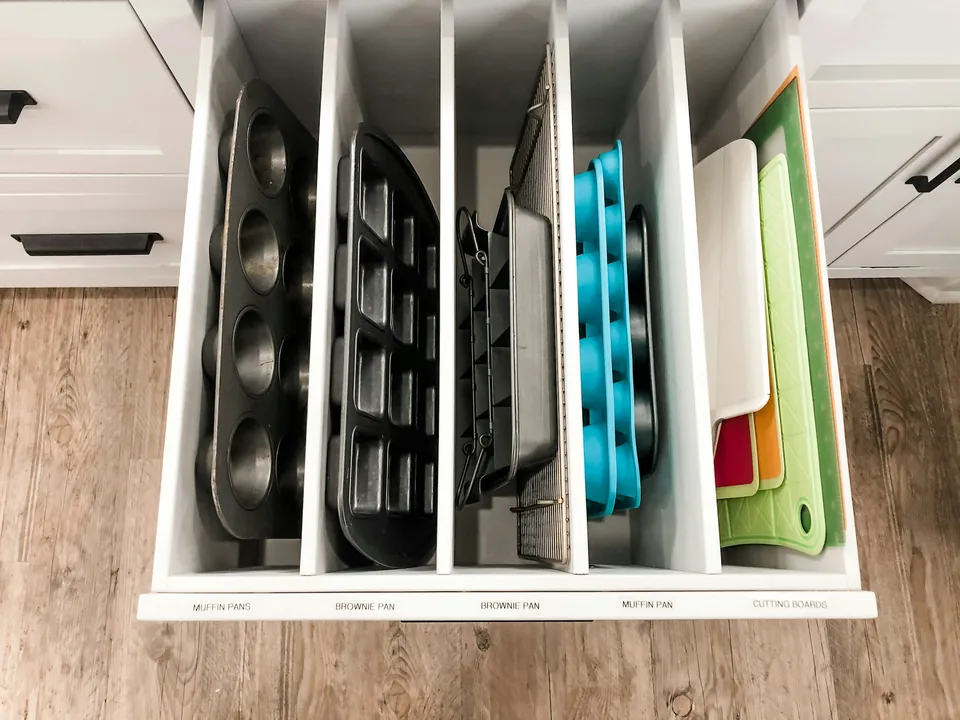
Long bins or baskets that run front to back act like drawers: pull the bin out to see everything in it. Label the front so anyone can put things back in the right place. Choose bins that fit the shelf depth rather than buying a set and hoping.
Keep the front row for everyday food
Put the things you use daily at the front and at eye level. Backup stock and occasional ingredients go behind or higher up. Heavy items like large bags of rice belong low down.
Try risers and turntables
A step riser lets you see three rows of tins at once. A turntable in a corner brings sauces and oils within reach with a spin. Both work especially well on deep shelves where things otherwise hide.
Give children a snack zone
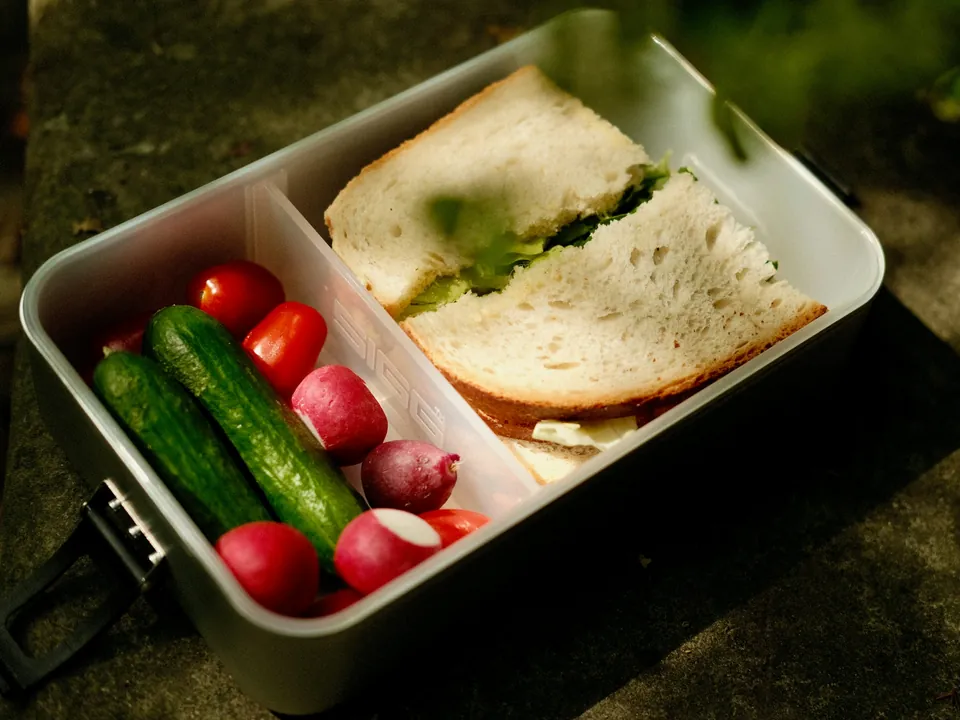
A clearly labeled basket at a child's height, refilled on a schedule rather than on request, helps children help themselves without emptying the shelf. Our snack and lunch station system has the details.
Front-to-back restocking
When new shopping comes in, put it behind the older stock so the older items get used first. Keep the shopping list close to the pantry and add anything that runs low as soon as you notice.
Check it monthly
Once a month, take a quick look at the backs of the bins and move anything close to its date to the front. It takes five minutes and saves food and money.
Adapt these ideas to your household. Organization guidance is general information, not medical, safety or financial advice.