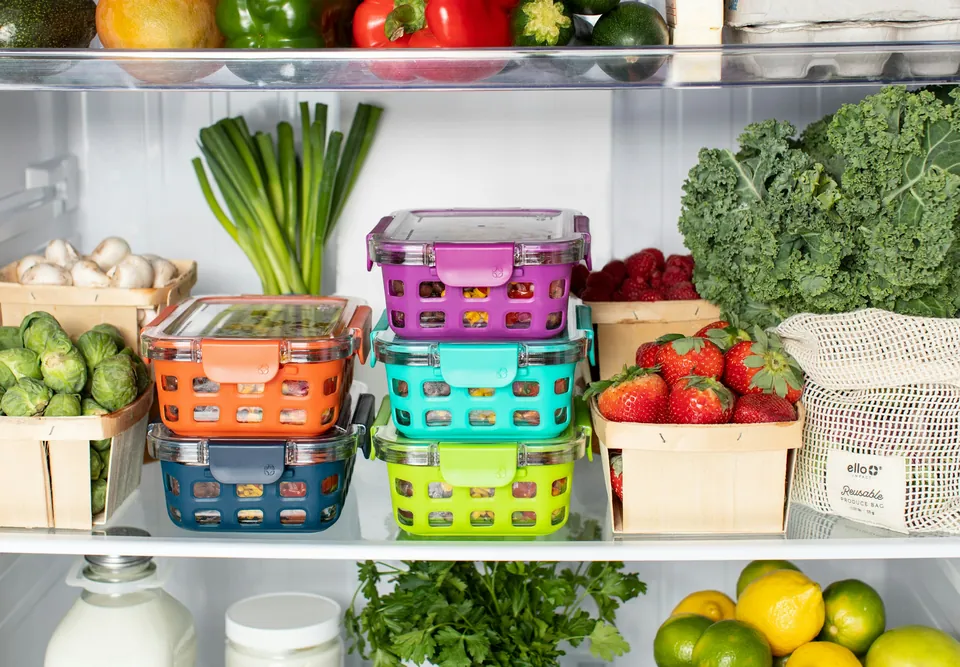
Most family fridges are not too small. They are organized by where things happened to land, so the leftovers slide to the back and the yogurt is behind the sauce jars. A few zones fix most of it.
Organize by who uses each shelf
Think about who opens the fridge and what they reach for. Children need their snacks and drinks low and at the front. The cook needs ingredients for tonight together. Everyone needs to see the leftovers.
- Top shelf: leftovers and ready-to-eat food, in clear containers, where adults see them first.
- Middle shelf: tonight’s and tomorrow’s dinner ingredients, grouped in one tray or bin.
- Lower shelf: a kids’ snack bin with portions they are allowed to take without asking.
- Bottom shelf: raw meat and fish, sealed and on a plate or tray, so nothing drips onto food below.
- Door: condiments and drinks, the things that tolerate the warmest part of the fridge.
Use bins as drawers
A clear, open bin works like a drawer you can pull forward. One bin for cheese and deli items, one for snack portions and one for “eat this first” keeps small things from disappearing. Label the front so everyone puts things back in the same place.
Make leftovers visible and dated
Food that cannot be seen does not get eaten. Store leftovers in clear containers, write the day on a strip of masking tape and keep them on one shelf. FoodSafety.gov advises eating most cooked leftovers within three to four days, so a dated label turns a guess into a quick decision.
The five-minute fridge check
Before the weekly shop, take five minutes: move older food to the front, plan one meal around what needs using and wipe the shelf that needs it most. Then write what is missing on the list. Our weekly meal planner keeps the plan and the grocery list together.
Keep it working
- Put new groceries behind older ones, not in front.
- Keep one shelf deliberately emptier for leftovers after a big meal.
- Check the fridge thermometer now and then: the FDA recommends 40°F (4°C) or below.
For the rest of the kitchen, see the after-dinner kitchen reset and how to organize food containers and lids.
Sources & further reading
Adapt these ideas to your household. Organization guidance is general information, not medical, safety or financial advice.