Meal planning often fails because it starts with a search for new recipes every week. Most families actually eat a small set of meals over and over, and that's a strength. A simple rotation turns those favorites into a plan that takes minutes.
List the meals you already make
Write down every dinner your household eats without complaint. Ten to fifteen is plenty to start. Include the easy nights: pasta, eggs on toast, leftovers, takeaway. Those count.
Give each night a loose theme
Themes such as pasta night, soup night, rice night, something on toast, or a "cook once, eat twice" night narrow the decision. On a busy evening, a theme with three options is far easier than an open question.
Plan around the week you actually have
Look at the calendar first. Late practices and early meetings are nights for the quickest meals or for leftovers from a bigger cook the night before. Save meals that take longer for nights when someone has time.
Cook once, eat twice
Doubling a recipe on a quieter evening gives you a second meal later in the week or a portion to freeze. Rice, sauces and cooked beans or lentils often batch well. Follow food-safety guidance for cooling, storing and reheating.
Shop from one list in store order
Turn the plan into a single shopping list grouped by section: produce, dairy, pantry, frozen. It's faster in the shop and makes forgotten items less likely.
Keep a "favorites" page
When a new meal is a hit, add it to the rotation list. When one stops working, take it off. After a few months you'll have a plan that reflects how your family really eats.
Try the free planner
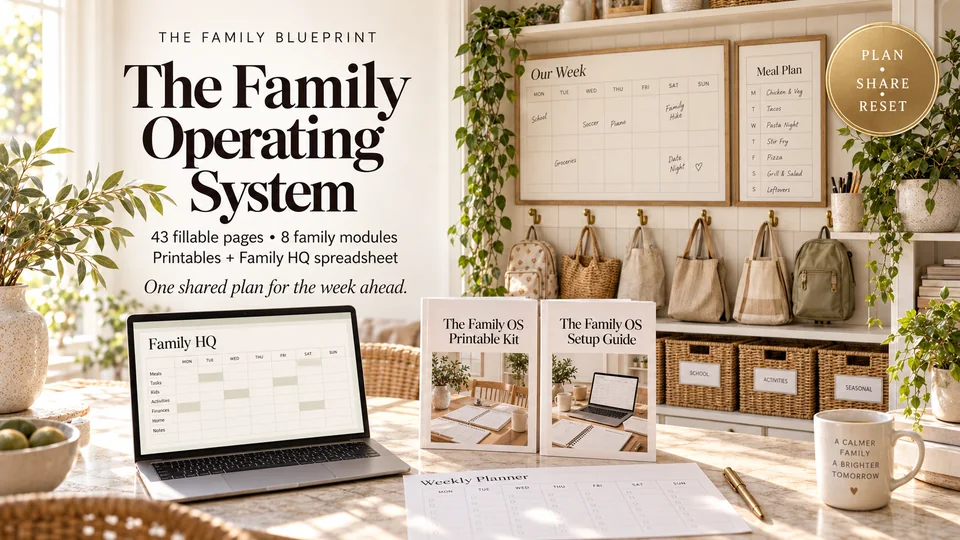
Our weekly meal planner lets you plan seven dinners and build a grocery list grouped by store section, then print it for the fridge.
Adapt these ideas to your household. Organization guidance is general information, not medical, safety or financial advice.