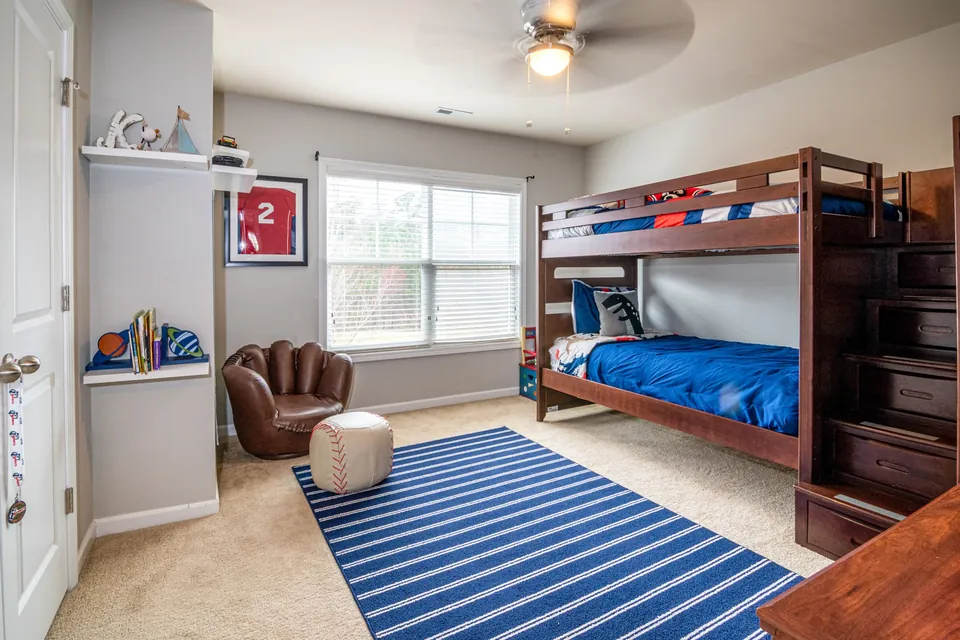
Sharing a room works best when each child has something that is clearly theirs, the shared parts are shared on purpose and the rules are agreed rather than announced.
Start with what belongs to whom
Make a quick list with the children: what is personal (clothes, special toys, school things) and what is shared (books, building sets, the rug). That list becomes the plan for the room.
Give each child their own zone
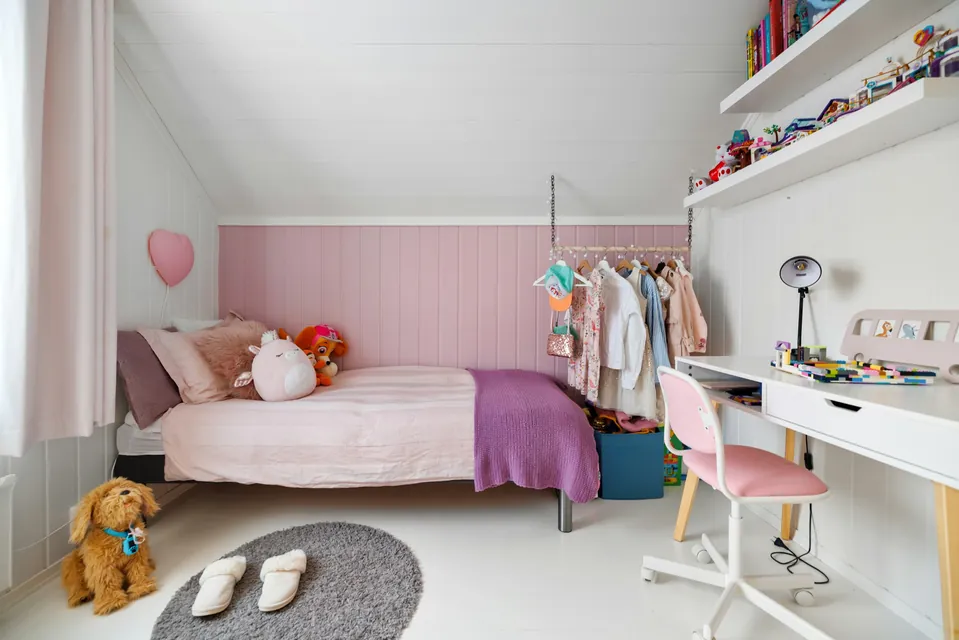
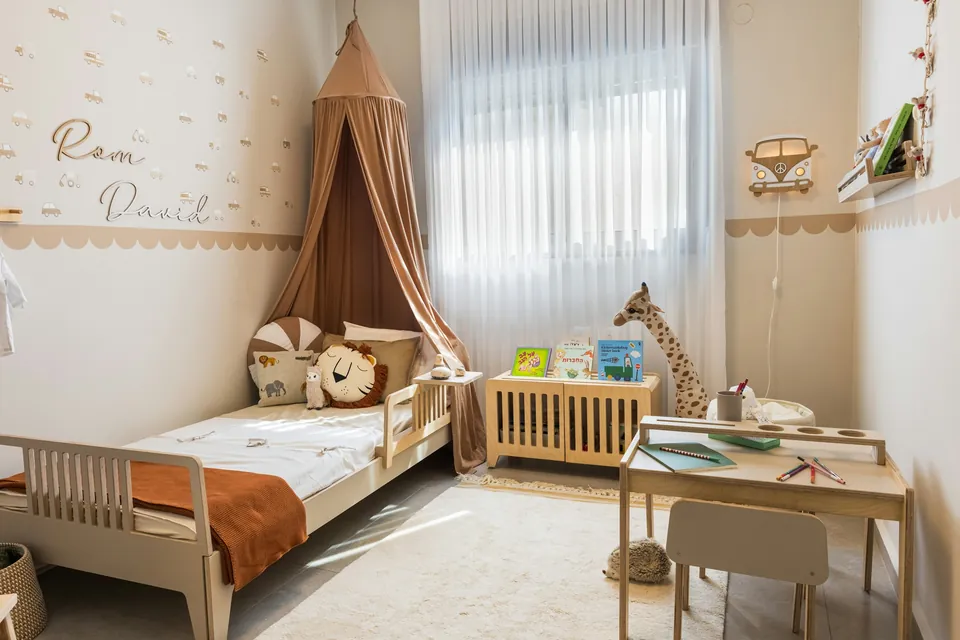
Even in a small room, each child needs a defined space: their side of the closet, their own drawers, a shelf or a basket by their bed. Color-code it: one color of hangers, labels or bins per child. Mix-ups drop quickly when the system shows whose is whose.
Share the rest deliberately
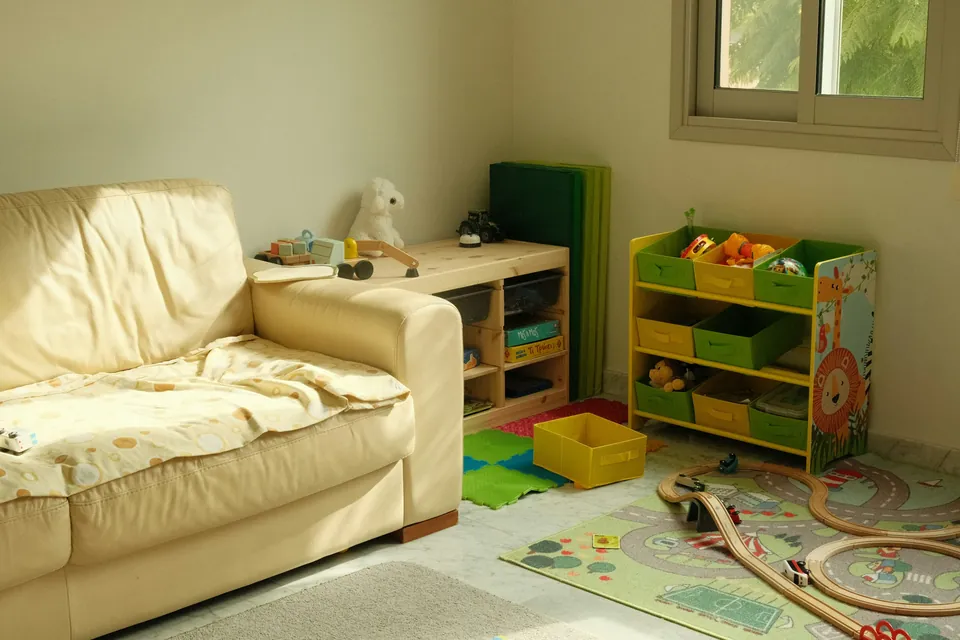
Put shared toys in the middle of the room in labeled bins anyone can use. Agree that shared things go back to the shared shelf, not to someone’s side.
Plan for different schedules
If bedtimes differ, the younger child needs a way to fall asleep while the older one reads: a clip-on reading light, pajamas laid out in advance and the older child changing in the bathroom. Bunk beds or a bed against each wall create more floor space for play.
Agree three room rules
Keep them short and positive, for example: knock or ask before borrowing, everyone tidies their own zone before bed, shared toys go back to the shared shelf. Write them on a card at child height. Our routine card maker can print a bedtime card for each child.
For room layout ideas, see seven zones every kids’ bedroom needs.
Adapt these ideas to your household. Organization guidance is general information, not medical, safety or financial advice.