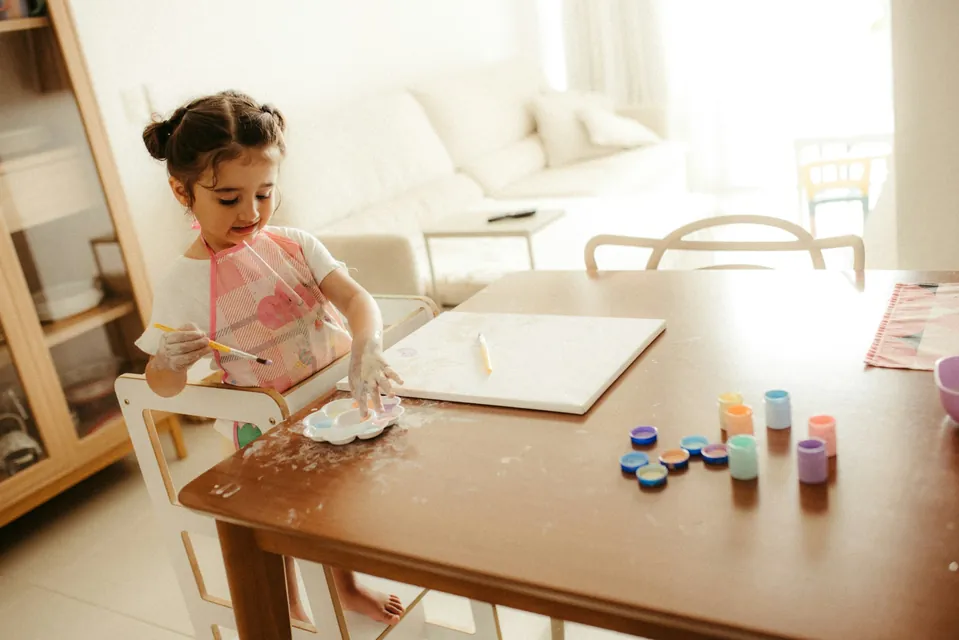
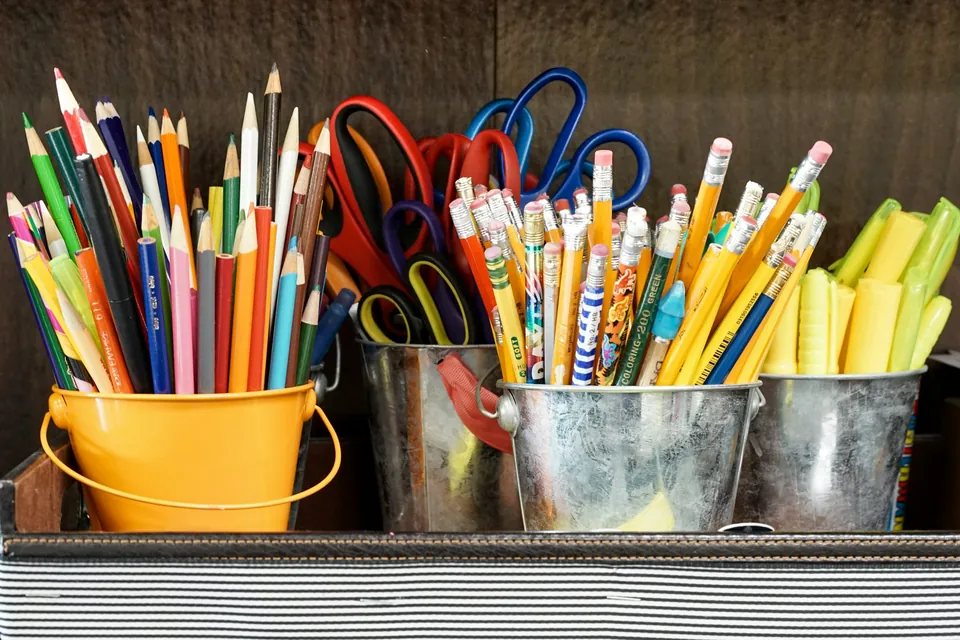
Craft supplies have a way of multiplying: half-dried markers, mystery glue, three kinds of glitter and a bag of pipe cleaners from a birthday party. The goal isn't a perfect craft room. It's supplies a child can find, use and put away without an adult rescuing the process every time.
Sort before you store
Tip everything out and test it. Markers, glue sticks and paints that have dried out go first. Group what's left by type: drawing, painting, cutting and sticking, modelling, paper, and special projects.
Choose visible over hidden
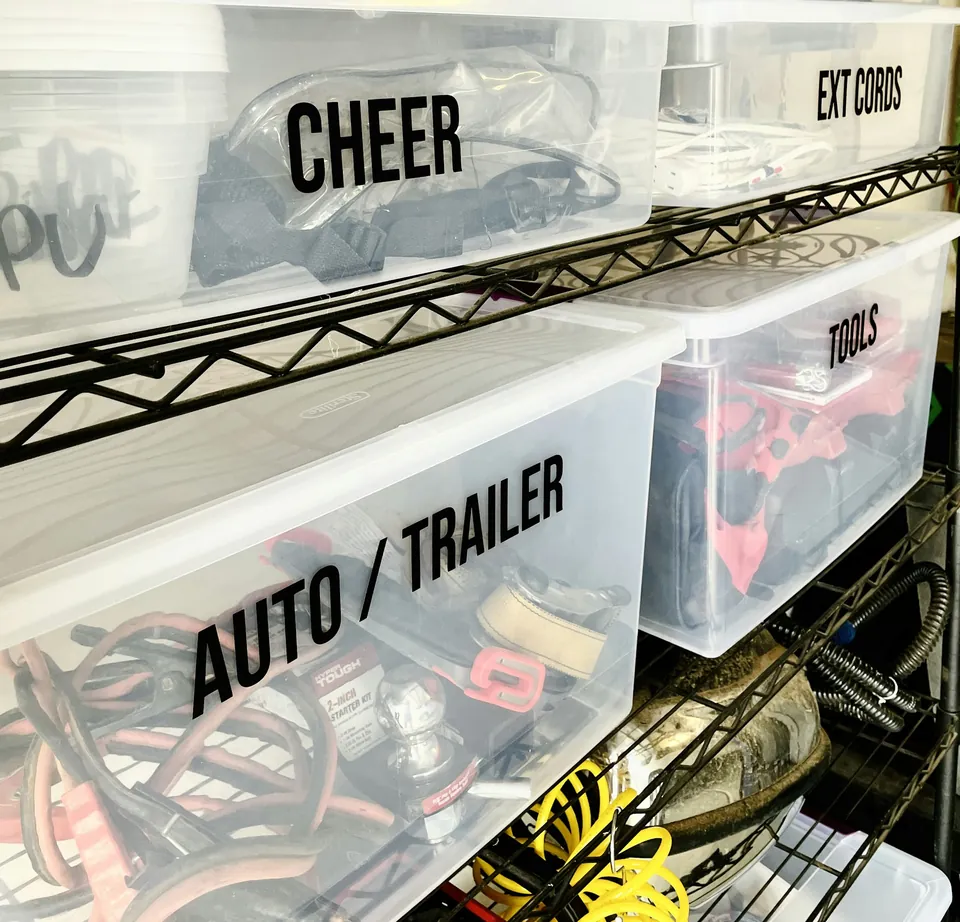
Many families, especially those with children who forget what they can't see, find that clear jars, open caddies and labeled bins work far better than lidded boxes in a cupboard. If a child can see the crayons, they'll use them. If they can't, they'll ask you.
Build a daily kit
Keep a small caddy with the supplies used most often: pencils, crayons, a few markers, child-safe scissors, glue sticks and a stack of paper. Everything else goes into occasional-project storage. The everyday kit stays light enough for a child to carry to the table and back.
Put messy supplies a little higher
Paint, glitter, slime ingredients and anything that needs supervision can live on a higher shelf. That isn't a punishment; it simply means an adult is around when those come out. Follow the age guidance on each product's label.
Give paper its own home
Paper gets wasted when it's crumpled in a drawer. A magazine file or a tray keeps blank paper flat. A separate folder can hold work in progress so unfinished projects don't take over the table.
Make cleanup part of the activity
End craft time with the same short routine: lids on, tools back in the caddy, paper in the folder, table wiped. Five minutes with music on is easier than a rule announced after the mess has dried.
When the finished artwork starts to pile up, our guide to what to keep from kids' artwork helps you decide.
Adapt these ideas to your household. Organization guidance is general information, not medical, safety or financial advice.