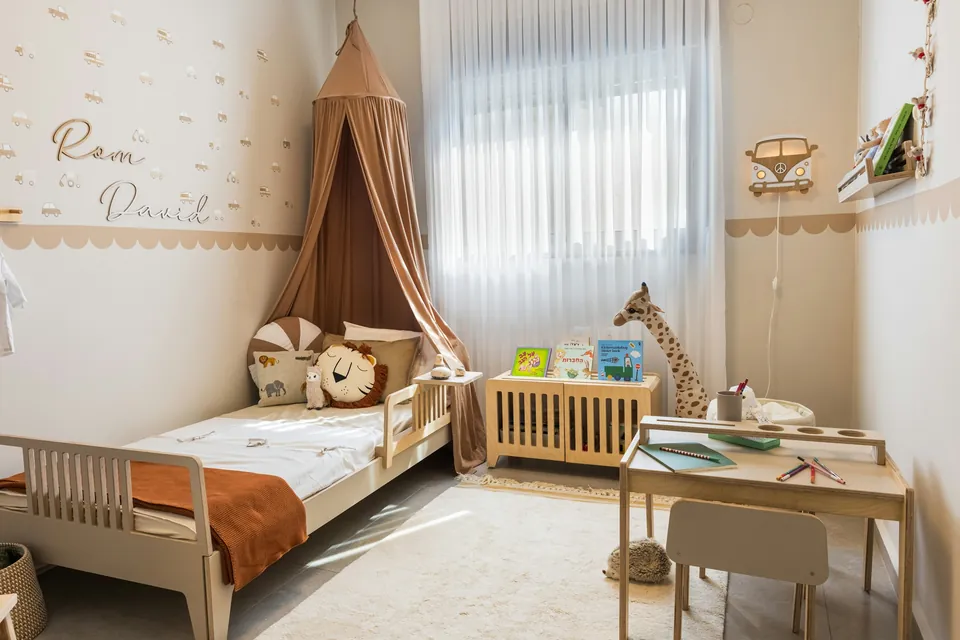
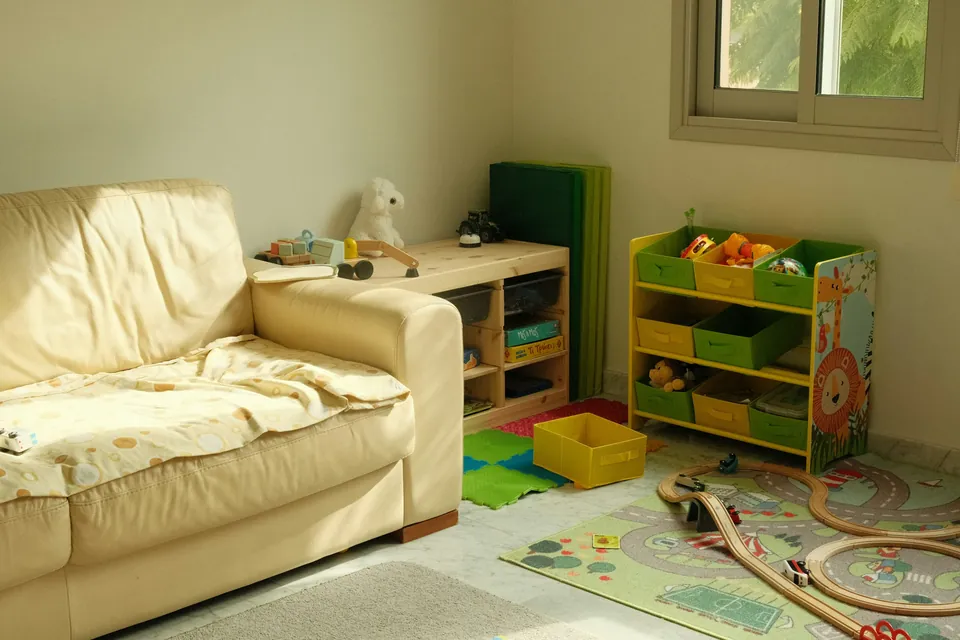
Toy rotation means keeping a smaller selection of toys available, storing the rest out of sight and swapping some of them every so often. Families usually try it for one of two reasons: the cleanup has become impossible, or the children seem bored in a room full of toys.
There is some research behind the idea. In a small 2018 study, toddlers given four toys played with each one for longer, and in more varied ways, than when sixteen toys were available. That does not mean every child needs exactly four toys. It suggests that fewer choices can make both play and tidying easier.
Sort before you rotate
Gather the toys into rough categories: building, pretend play, vehicles, puzzles and games, art, books and comfort items. Pull out anything broken or missing pieces. Set aside the everyday favorites; those stay out and are not part of the rotation.
Build a few small sets
Divide the remaining toys into three or four sets, each with a mix of categories. A set might be a building toy, a pretend-play basket, a puzzle, a vehicle bin and a handful of books. Store the sets in labeled boxes somewhere children cannot easily reach, such as a high closet shelf.
Keep the amount that is out at once small enough that your child could tidy it in a few minutes with a little help. That is the real test.
Swap on a rhythm, not a whim
Every week or two, exchange one set for another. Many families swap on the same day as another routine, such as the weekend reset. Watch what gets played with. A toy that sits untouched through two rotations may be ready to pass on.
When rotation backfires
Some children fixate on the toys in storage. If that happens, make the rotation more predictable: show them the boxes, name the swap day and let them choose one item to bring out early. Other children do better with a smaller collection overall and no rotation at all. Both are fine.
The gifts that keep arriving
If relatives are generous, a specific request usually lands better than a general “no toys, please.” Offer ideas that do not add to the pile: an outing together, a class, art supplies that get used up, a book, or a contribution toward one bigger item your child is saving for. When a new toy does arrive, let an older one leave or move into storage.
Make tidying part of play
End play with a short, predictable tidy: toys back in their baskets, books on the shelf. Label baskets with pictures for children who are not reading yet. When the room holds less, that last step stops being the hardest part of the day.
Sources & further reading
Adapt these ideas to your household. Organization guidance is general information, not medical, safety or financial advice.