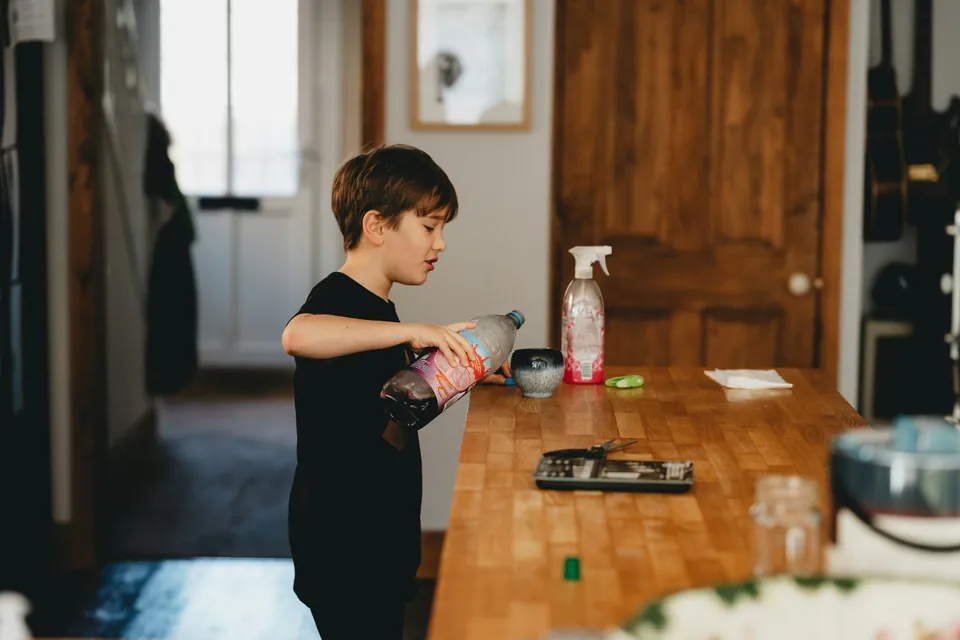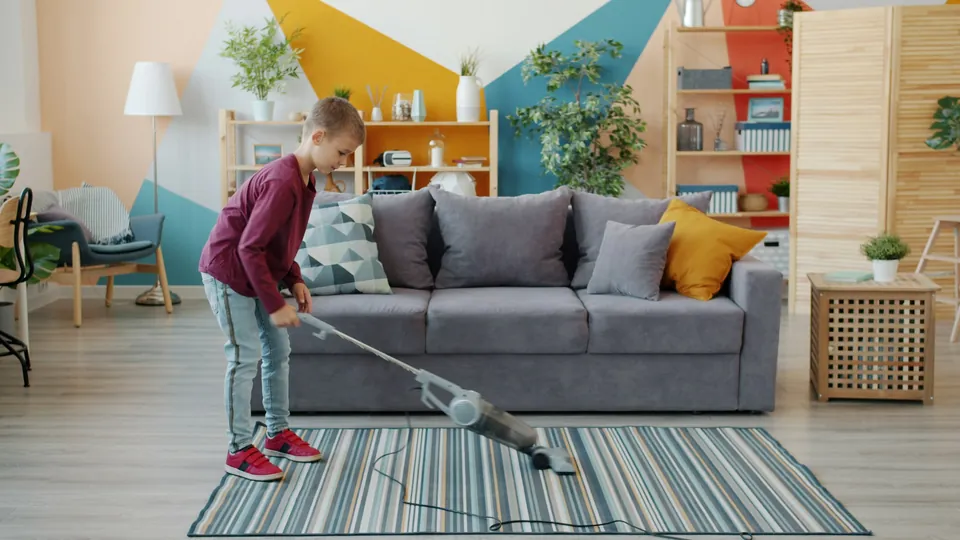
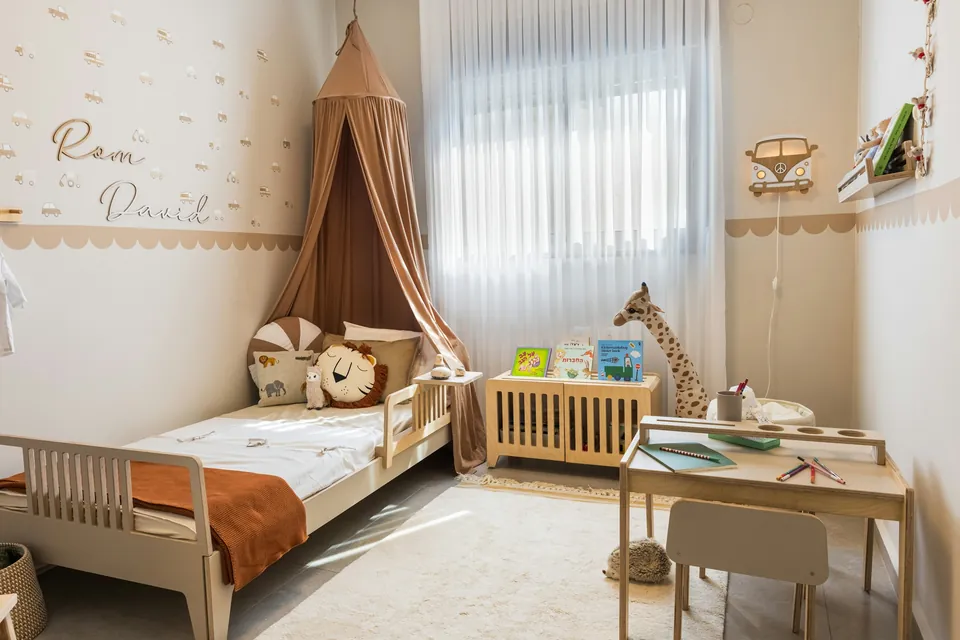
“Clean your room” is one of the most common requests in family life and one of the least clear. To an adult it means a finished room. To a child it can mean anything from shoving everything under the bed to standing in the doorway feeling defeated.
Break the room into a sequence
Most rooms can be reset in the same order every time:
- Clothes. Dirty clothes in the hamper, clean clothes folded or hung.
- Bed. Pull up the covers. It does not need to be perfect.
- Toys and books. Back into their baskets and onto the shelf.
- Rubbish. Into the bin.
- Surfaces. Clear the desk or bedside table.
- Floor. Anything left gets a home or goes in an “ask a grown-up” basket.
Write or draw the steps on a card and put it at your child’s eye level. Children who cannot read yet can follow pictures.
Make every item’s home obvious
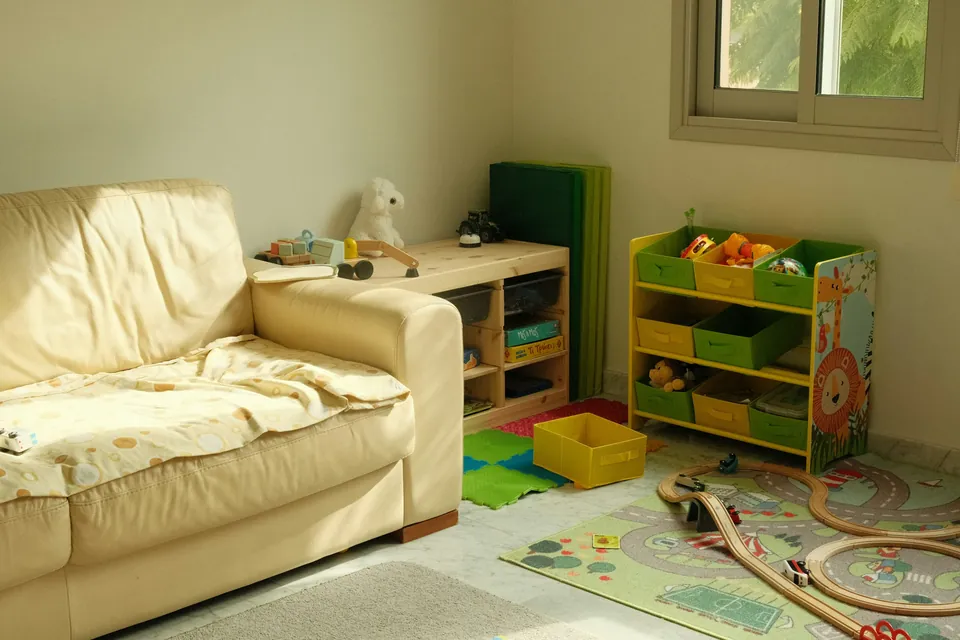
A reset is only as easy as the storage. Open baskets beat lidded boxes for everyday toys. Label baskets with a word and a picture. Keep rails and hooks within reach. If an item has no obvious home, it will end up on the floor.
Do it together first
For younger children, the first few resets are a team job. Work alongside them, naming each step, and gradually do less. Doing it at the same time every day, such as before dinner or bath, often matters more than how thorough it is.
Right-size the job
A room with too much in it cannot be reset quickly. If the reset regularly takes more than ten minutes, there may be too many toys out at once. Our guide to toy rotation can help.
Notice the effort
Point out what went well: “All the books are back on the shelf.” Specific notice teaches more than a general “good job” and makes the next reset feel achievable.
Make the steps visible with a free printable routine card.
Adapt these ideas to your household. Organization guidance is general information, not medical, safety or financial advice.