Getting dressed is one of the first jobs children can own completely, if they can reach their clothes and understand where everything lives.
Keep only what fits and suits the season
Go through the closet with your child and remove anything too small or out of season. Store outgrown clothes using a simple outgrown clothes system. Fewer choices make getting dressed faster.
Bring everything down to their height
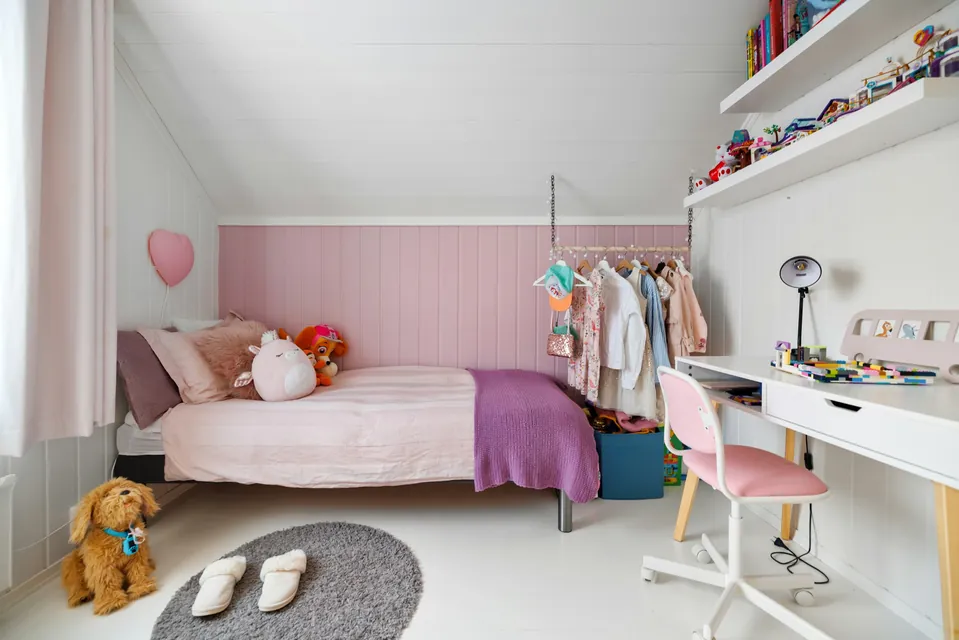
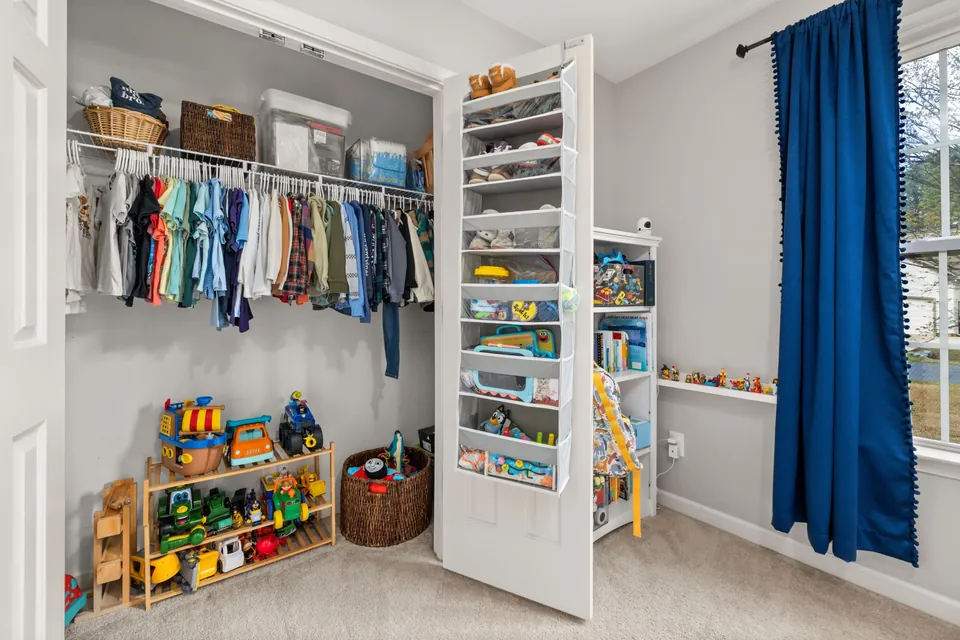
A tension rod or a hanging rail at child height doubles the usable closet. Put everyday items low and occasional items, like formal outfits, high.
Label drawers by category
One drawer each for tops, bottoms, underwear and socks, and pajamas works for most children. Use picture labels for younger children. Fold clothes so they stand upright in the drawer; children can see every item without pulling everything out.
Try a weekly outfit organizer
If mornings are rushed, lay out five outfits on Sunday in a hanging organizer or five labeled baskets. Children choose the order, adults choose the clothes. It moves a decision out of the morning, the idea behind planning school mornings the night before.
Add a place for the in-between clothes
Clothes worn once but not dirty need somewhere other than the floor: a hook or a small basket solves it.
Teach the put-away
Children can usually start putting away their own folded laundry from preschool age, with help. See what fits your child in chores by age.
Adapt these ideas to your household. Organization guidance is general information, not medical, safety or financial advice.