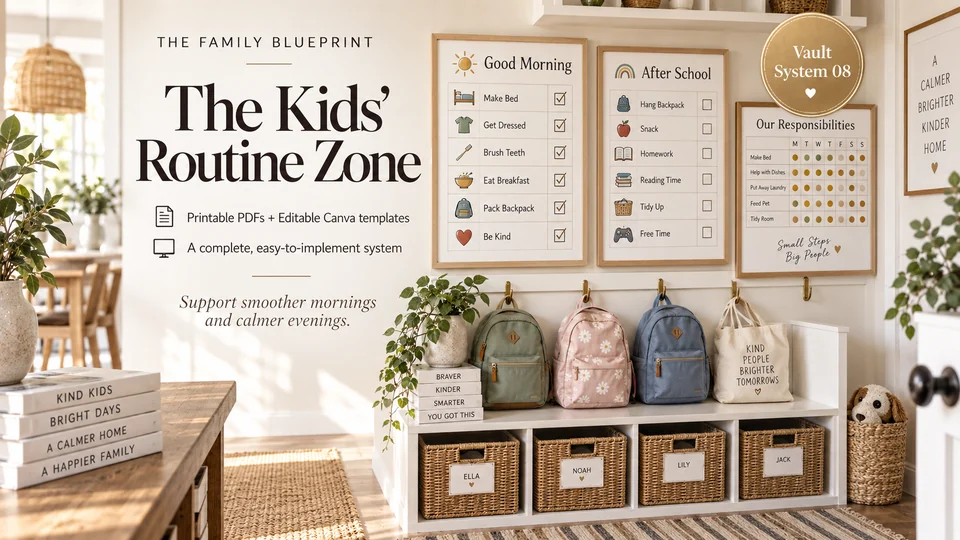
A morning checklist is most useful when it matches what actually happens in your home. Before adding another chart, notice where the sequence gets stuck. Is it finding clothes, packing a bag, locating a form, or deciding what to do next?
Move one decision earlier
Choose the recurring problem that is easiest to solve the evening before. Check the next day’s requirements together and put the relevant item in a predictable place. That might mean a library book in the bag or a school uniform set aside. You do not need to prepare every detail of the next day to make one difficult transition easier.
Build the preparation into something that already happens. After dinner, check the bag. After changing clothes, choose tomorrow’s outfit. A routine tied to an existing activity is easier to notice than a separate instruction floating through the evening.
Write the real sequence
Use a short sequence your child can follow with the support they need. “Get ready” may be too broad. “Get dressed, eat breakfast, brush teeth, collect bag” is easier to talk through. Adjust the order to your household rather than treating an example as a rule.
Use pictures, words or a combination that makes sense to the child. Place the reminder where it is needed and leave enough space to mark progress if that helps. A chart that is too high to see or too detailed to read adds another obstacle.
Practice when nobody is rushing
Walk through the sequence during a calmer moment. Show where each item belongs and what happens when a step is finished. Expect to give help; a visual reminder supports teaching but does not replace it.
Notice which steps need a smaller action or an adult alongside. Different children need different levels of support, and those needs can change from day to day.
Review the setup, not just the child
If the same step repeatedly fails, look at the environment. Are shoes stored far from the exit? Does a lunch container still need washing? Is the chart asking for too many decisions at once?
Try one adjustment for the next few mornings. Keep what helps and remove what creates more work. A useful routine leaves room for a difficult day and a fresh start tomorrow.
Adapt these ideas to your household. This free editorial guide is separate from the paid Vault files.