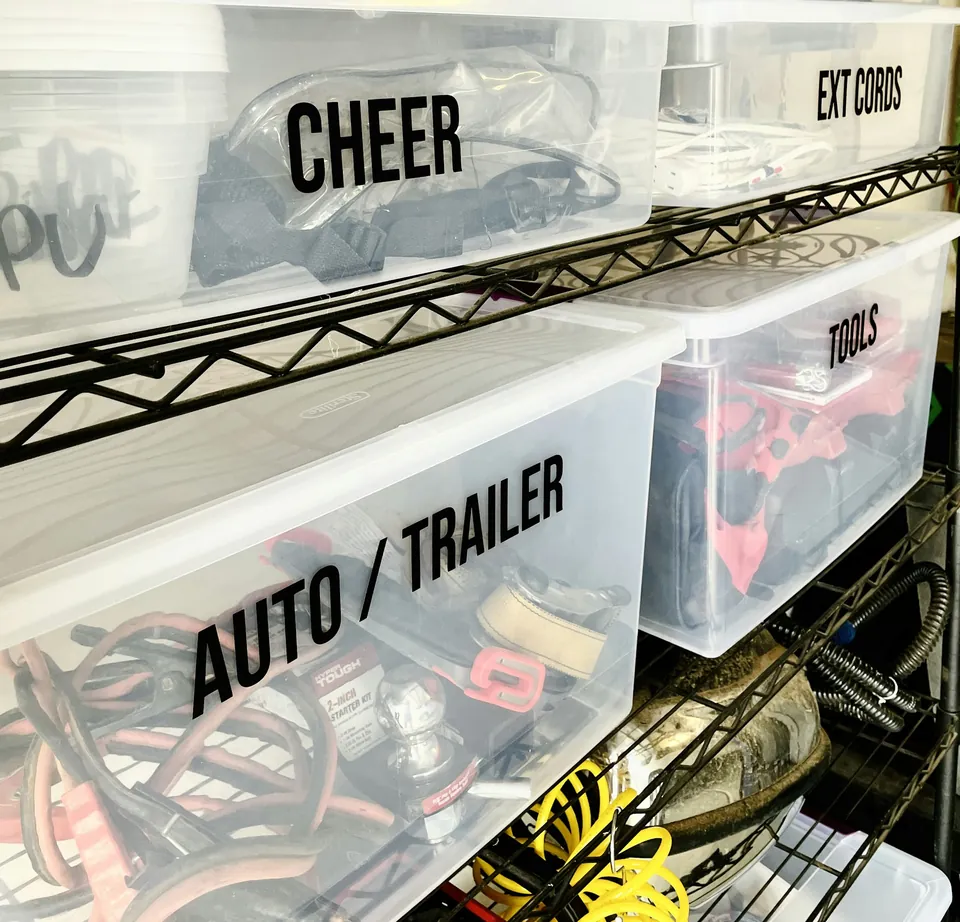
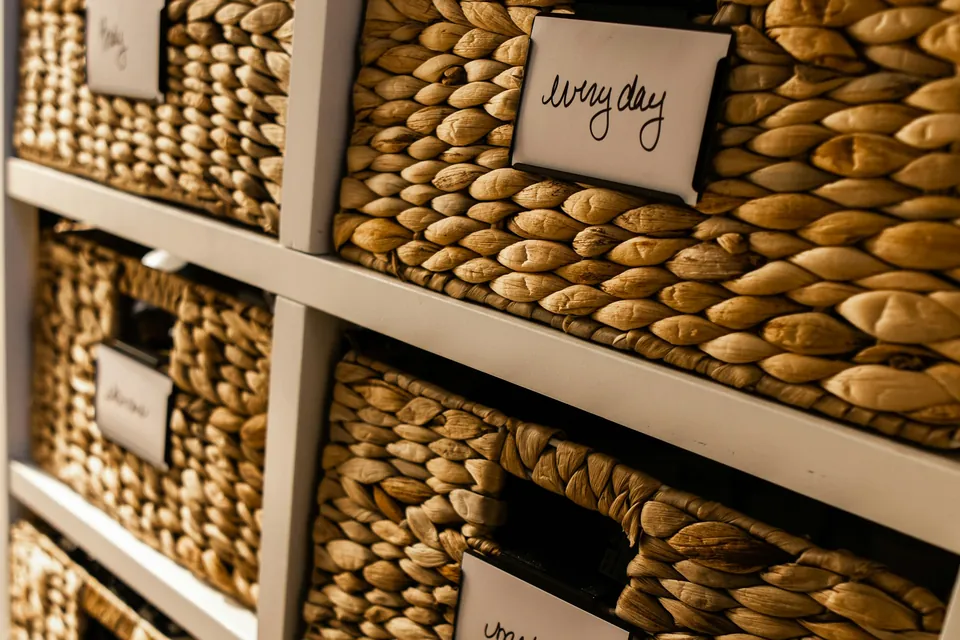
Labels are what turn a shelf of matching bins into a system other people can use. Without them, only the person who organized the shelf knows where things go, and everyone else drops items wherever there's space.
Label the category, not the item
"Batteries" and "Light bulbs" stay tidier than "Electrical stuff", but "AA batteries for the TV remote" is too specific to last. Aim for the level of detail that matches how your family looks for things.
Use the words your family uses
If everyone calls it "the craft box", label it "Craft box", not "Art and creative materials". The best label is the one people read without thinking.
Add pictures for children
For young children, a simple drawing or photo next to the word means they can put toys back on their own. Picture labels also help family members who read a different language.
Label where you'll see it
Put the label on the front of the bin, at the height people actually look. For stacked or deep storage, label the side facing out. A label hidden against the wall doesn't help anyone.
A starter set of labels
Many family homes can begin with labels such as: Batteries, Bulbs, Cords & chargers, Tools, Tape & glue, Gift wrap, First aid, Medicines (stored securely), Cleaning refills, Spare toiletries, School supplies and Returns. Add others as categories appear.
Change labels when the system changes
If a bin keeps overflowing or stays empty, the category isn't working. Relabel it rather than squeezing in things that don't belong. Removable labels or clip-on tags make this easy.
Keep a master list for big storage
For a garage, loft or basement, a single page listing each labeled box and where it is saves opening every lid. Tape it inside the door or keep a photo on your phone.
Put the labels to work in the utility closet, the linen closet and the kids’ closet and dresser.
Adapt these ideas to your household. Organization guidance is general information, not medical, safety or financial advice.