Household duplicates often arrive because the buying decision happens far away from the storage shelf. You see a product while shopping and cannot remember whether there is a spare at home. A simple inventory rule can connect those two moments.
Count before setting a limit
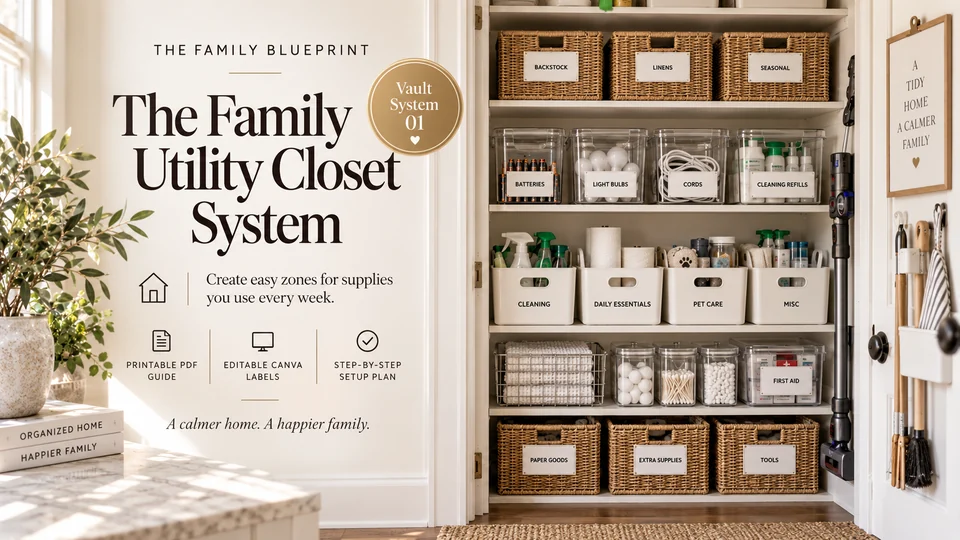
Gather matching household essentials and count the usable stock. Keep products stored according to their labels; do not mix incompatible items just to make a tidy shelf. Note what you already own before purchasing storage containers.
Pick an amount that makes sense for your space and use. A small home may need only one spare of a frequently used product. A different household may need more. The aim is a deliberate limit, not a universal quantity.
Create the handoff
When the last spare moves from storage into use, add that product to the shared shopping list. That is the trigger. The person taking the spare handles the note so someone else does not have to discover the empty shelf later.
Put the list where the handoff is easy. That might be a note beside the cupboard or a shared digital list already used by the household. Introducing an unfamiliar app is not necessary if paper already works.
Keep older usable stock visible
When new supplies arrive, place them behind older usable stock where appropriate. Keep labels and dates visible. Avoid hiding several half-used products behind a row of new ones. Follow storage and expiry guidance for each item.
Reconcile once a week
During the weekly reset, glance at the shelf and compare it with the list. Remove items someone else has already bought. If duplicates keep appearing, ask whether everyone knows the storage location and the restock rule.
This system is intentionally simple. You do not need to track every single use. You need a reliable signal when another purchase becomes useful. Let the available shelf space and your household’s habits shape the details.
Adapt these ideas to your household. This free editorial guide is separate from the paid Vault files.