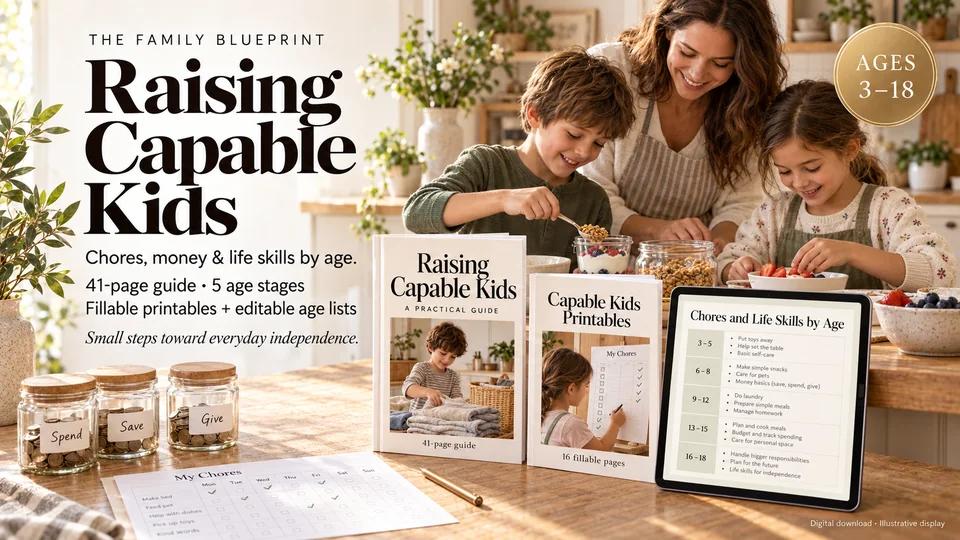

An allowance gives children real practice with money: waiting, choosing and sometimes making mistakes with small amounts. Three jars make the lessons visible.
Decide what the allowance is for
Some families tie money to specific extra jobs, while everyday chores are expected as part of family life. Others give a set amount to learn budgeting. Either works if the rule is clear. See chores without a complicated reward chart.
Use three jars
- Save: for something bigger they want in the future.
- Spend: for small things now.
- Share: for giving, to a cause or a gift for someone.
Clear jars let younger children see the money grow. Label each one.
Choose a split
A common starting point is a third in each jar, or more in save as children get older. Our free allowance planner calculates the split and prints jar labels.
Pay on the same day
A regular payday, like Saturday morning, makes it predictable. Pay in coins and notes for younger children so they can count it.
Let them make small mistakes
If a child spends everything on something that breaks, that is a cheap lesson. Talk about it without rescuing them.
Grow it with age
Older children can move to a bank account, track spending in a notebook or manage money for their own clothes. The U.S. Consumer Financial Protection Bureau’s Money as You Grow pages have age-by-age ideas.
Sources & further reading
Adapt these ideas to your household. Organization guidance is general information, not medical, safety or financial advice.