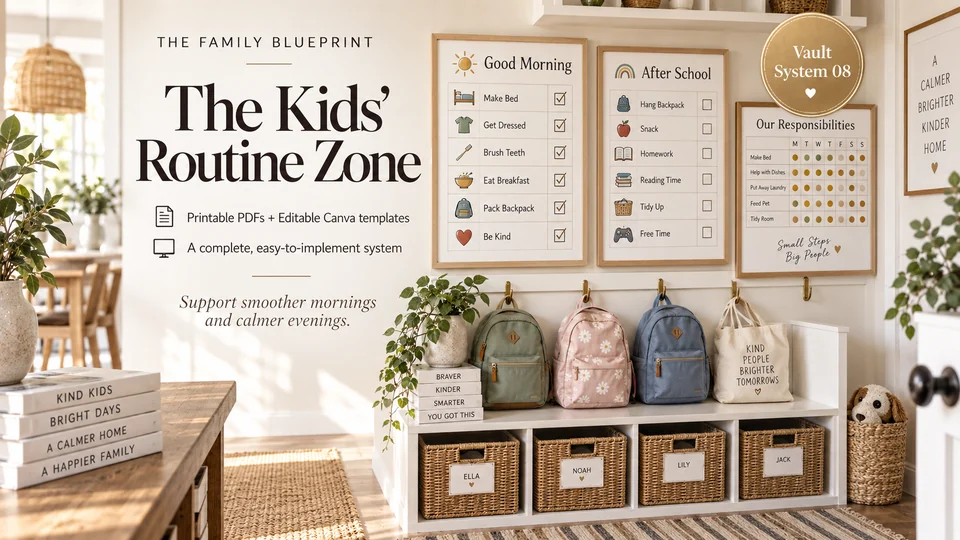
Sharing household work starts with making that work understandable. A chart can help people remember, but the chart cannot explain how to do the job or what a reasonable result looks like. Begin with one task that fits the child’s abilities and the supervision available.
Choose a concrete job
“Help around the house” is difficult to act on. “Put your books on this shelf” has a visible beginning and end. Choose a task the child can practice safely, with appropriate help. Avoid assuming an age alone tells you what a child can do independently.
Explain where the supplies belong and what the task includes. If putting away laundry means only placing socks in a drawer, start there. You can add another step once the first is familiar.
Show what finished looks like
Do the job together and describe the steps. Let the child try while you stay available. A picture of the finished shelf or a very short list can be more useful than repeated verbal reminders.
Be realistic about the result. Learning a task involves practice, and a household contribution does not have to match an adult’s preferred arrangement to be useful. If a step creates frustration, simplify it rather than adding another warning to the chart.
Attach the task to a familiar moment
Choose a repeatable point in the day: books away after reading, bag hung up after school, or a place setting before dinner. A specific cue helps everyone remember when the task happens.
Agree who will support the task when necessary. A new routine is shared work while it is being learned. Avoid making the child responsible for remembering a complicated sequence that nobody has practiced with them.
Review the routine together
Ask what is working and what feels unclear. Maybe the shelf is too full, the basket is hard to reach or the task lands at an exhausted part of the day. Adjust the setup when it is the barrier.
You can use a checklist or a reward approach if it suits your family, but neither needs to be elaborate. Start by making the contribution visible, teachable and repeatable. Add more responsibility gradually, with support that reflects the individual child.
Adapt these ideas to your household. This free editorial guide is separate from the paid Vault files.