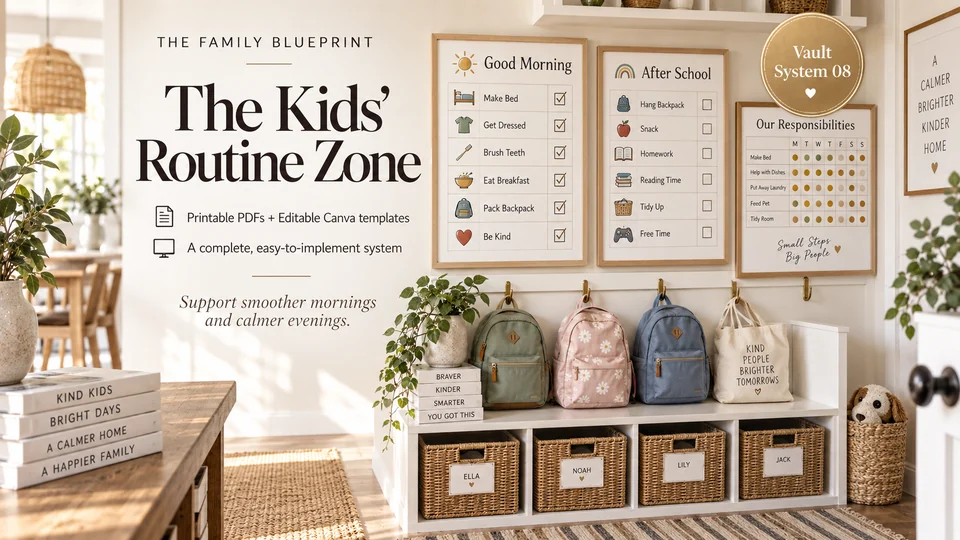
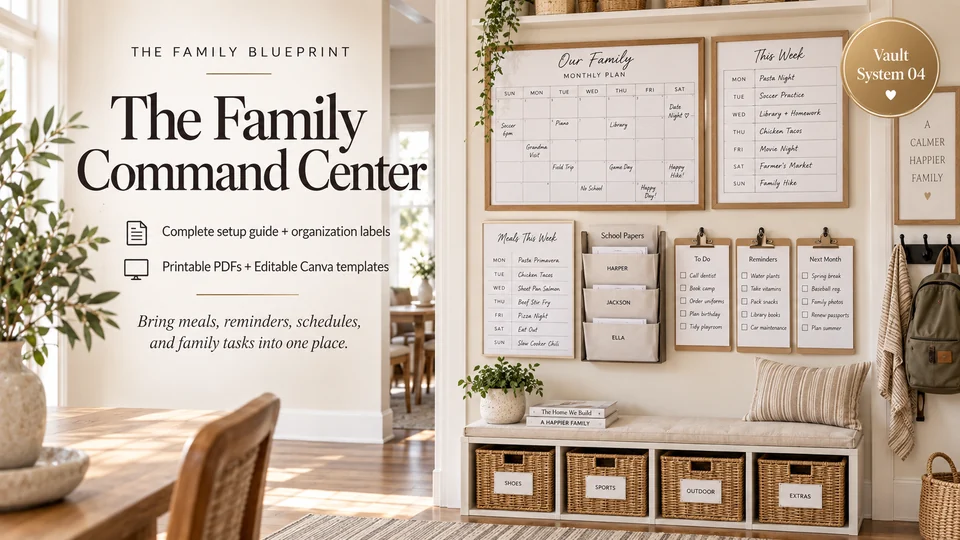
A drop zone is a place where the things arriving with you stop before spreading through the house. It does not need to look like a fitted mudroom. It needs to sit on your actual route and be simple to use with your hands full.
Observe before buying
For a few days, notice where bags, coats and shoes naturally land. If everyone enters through the kitchen, a beautiful system beside an unused front door will probably be ignored. Work with the route your household already takes.
Write down what genuinely needs to live there. Daily shoes and bags might stay; sports gear used once a week could live nearby. A small entryway works better when it serves current needs rather than every possible outing.
Give each person a simple place
Try one appropriately installed hook and one basket per person. Make them reachable for the people who use them, without creating a trip hazard or blocking the exit. Use plain names or an easy visual cue if that helps everyone identify their space.
Set a capacity rule. If only one everyday bag belongs on the hook, an extra bag needs to return to another storage place. The limit is what keeps the zone from becoming a second closet.
Separate arriving from leaving
A small outgoing basket can hold returns, library books and items for the next trip. Keep it separate from incoming school papers so “needs action” and “ready to go” do not become the same pile.
Check the basket before leaving. Without that habit, it is simply another place to forget things. Add the check to an existing departure routine, such as collecting keys.
Build the arrival reset
Name the few actions that happen on coming home: shoes to the tray, bag to the hook, lunch container to the kitchen and papers to the inbox. Practice the sequence together. A smaller set of steps is often easier to repeat than a detailed set of rules.
At the end of the week, remove anything that does not belong. If one item keeps returning to the floor, reconsider its assigned place. The best sign of a useful drop zone is that the people in your household can use it without a long explanation.
Adapt these ideas to your household. This free editorial guide is separate from the paid Vault files.