Laundry rarely feels overwhelming because of one load. It feels overwhelming because clothes stall at every stage: in hampers, in the machine, on the sofa, in a basket at the foot of the bed. A good routine keeps laundry moving through each stage without long stops.
Choose a rhythm that fits your week
Some households do a load most days. Others prefer two or three laundry days. Either can work. What matters is that the rhythm is predictable enough that nobody wonders when their sports kit will be clean. Put it on the family calendar if that helps.
Only start what you can finish
A load is not done when the machine stops. Before you start one, check that you will have time to move it to the dryer or drying rack and to put it away. A wet load forgotten overnight costs more time than it saves.
Reduce the places laundry can wait
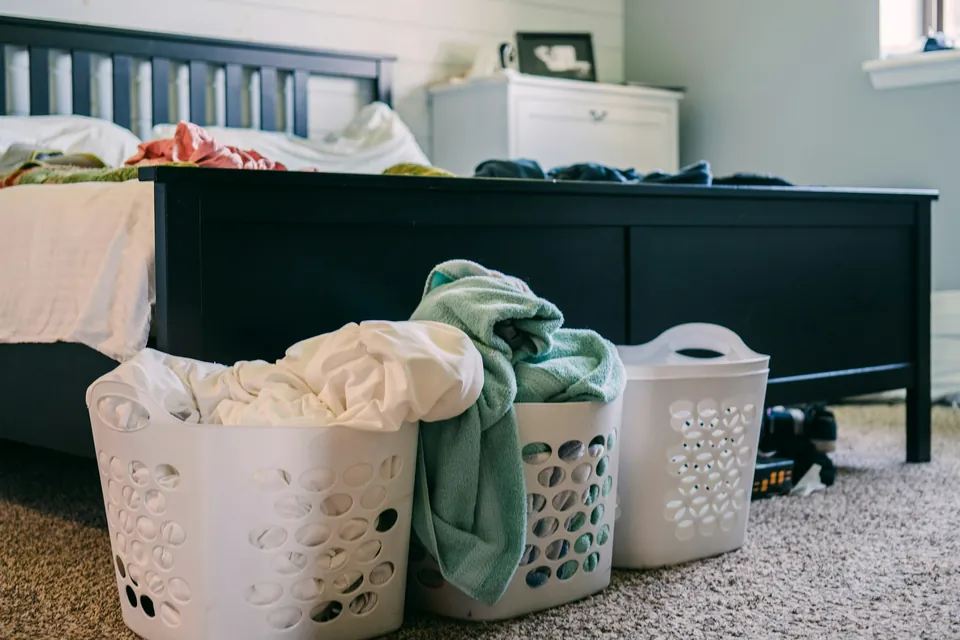
Every extra basket is another place for clothes to stall. Try one hamper per bedroom, or one central hamper near the machine. Keep a single basket for clean clothes in transit, and empty it the same day.
Sort in a way that suits you
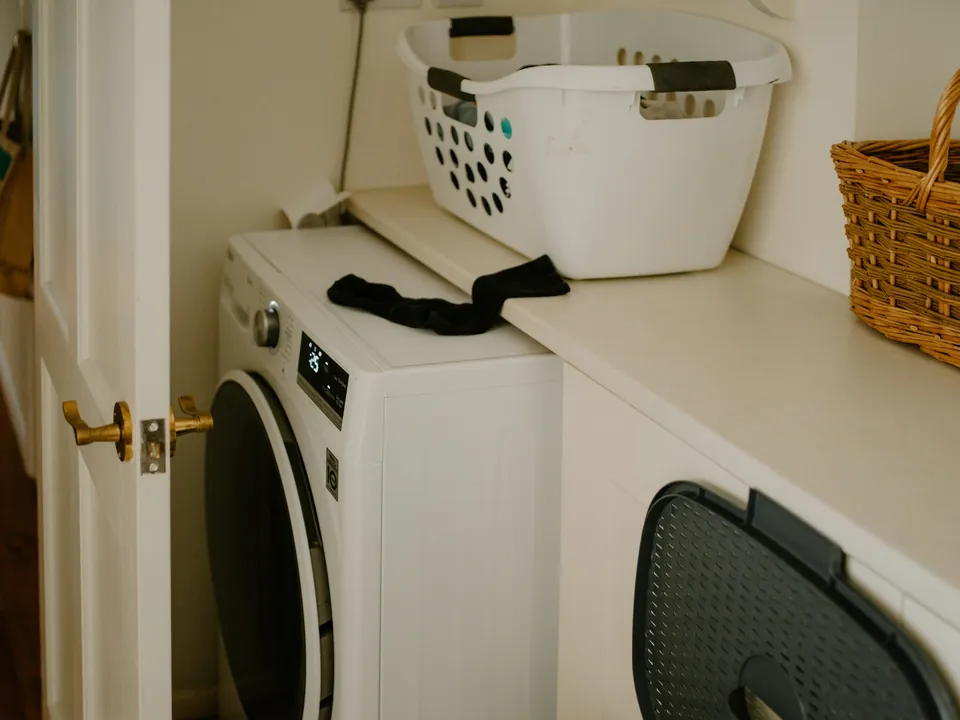
Sorting can happen as clothes go into the hamper, with separate bags for darks and lights, or at the machine. Follow the care labels on each garment and your machine’s instructions. Keep stain treatment near the machine so it happens before washing, not after.
Make folding part of the load
Fold straight from the dryer or rack into piles by person. With practice, children can match socks, fold towels and put away their own piles. Simplify where you can: drawers with a clear place for each item, and a hook for pajamas that will be worn again.
Shrink the sock problem
Pairing socks is a small job that grows. Buying several pairs of the same style for each child cuts the matching, and a small mesh bag per person keeps pairs together in the wash.
When you fall behind
It happens to everyone. Pick one basket and take it all the way through, including putting it away. Then do the next. One load moved to done feels better than five loads moved halfway.
Adapt these ideas to your household. Organization guidance is general information, not medical, safety or financial advice.